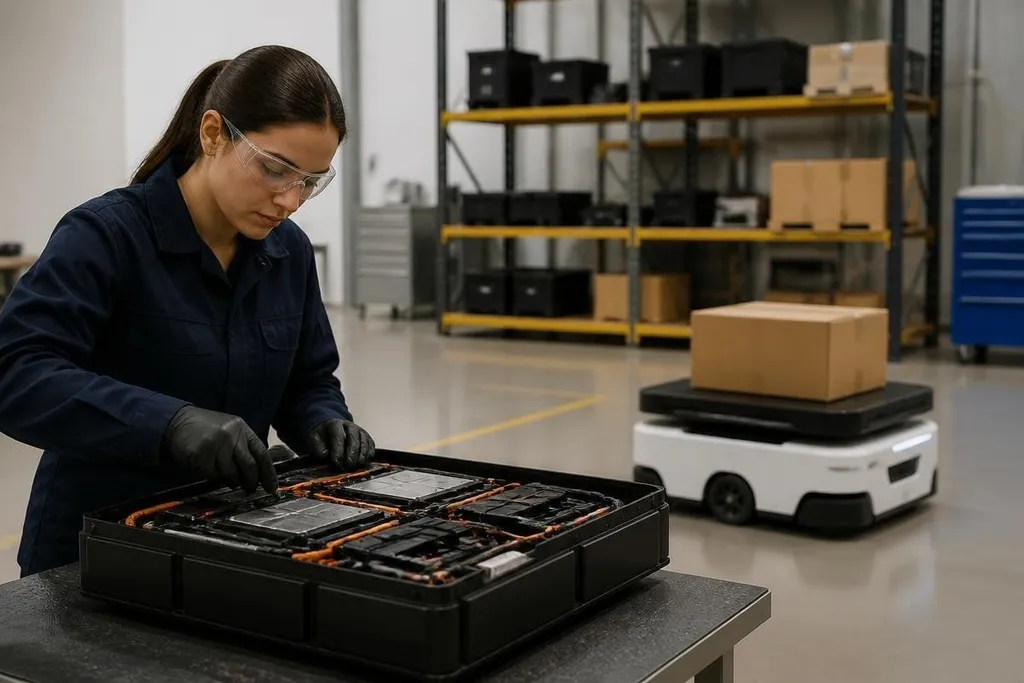
A robot battery can store enough energy to move motors, lift loads, and run sensors for hours. The same stored energy can create heat, smoke, or fire when a cell, cable, charger, or control system fails.
A safe battery plan covers the full cycle: selection, installation, charging, use, storage, and disposal. That matters for a warehouse manager, lab operator, or technician because battery trouble can damage equipment and stop work without warning.
Quick read
- Heat, swelling, damage, and strange smells are stop-use signs.
- The charger, battery, robot, and battery management system must work as one set.
- A safety check needs a clear owner and a written response.
What can go wrong
Most mobile robots use rechargeable lithium-ion batteries. Inside each pack, cells store electrical energy through chemical reactions. A short circuit, crushed cell, bad connection, or charging fault can turn electrical energy into heat faster than the pack can remove it.
That heat can start a process called thermal runaway. One hot cell damages nearby cells, which can then produce more heat. A pack may vent gas, swell, smoke, or burn. The outside case can look fine until the failure has already started.
Mechanical damage deserves the same care as an electrical fault. A collision, fall, crushed cable, or loose mount can harm cells or insulation even when the robot still moves. I'd stop using a pack after serious impact until a qualified technician checks it.
Water and dust add another path to trouble. The robot's enclosure rating may cover the machine, but the battery connector, charging port, and pack seal still need inspection after work in wet or dirty areas.
Charging needs its own plan
Charging is a work task, not a background detail. The charger must match the battery's voltage, current, connector, and charging method. A damaged cable or unapproved charger can defeat the controls built into the pack.
A battery management system, or BMS, tracks cell voltage, temperature, and charge level. It can stop charging when readings move outside safe limits. It cannot repair a damaged cell, loose connector, blocked cooling path, or charger with the wrong settings.
Give charging stations a clear area with airflow and a surface that can handle heat. Keep paper, packaging, fuel, and other easy-to-burn material away from the station. Check the pack and charger before connection, then watch for heat, smell, noise, or swelling during the charge.
A charging plan needs one named person who can stop the charge when the pack or charger shows a fault. Battery safety reports from Robot24.com can show whether a company names the battery, charger, test, and response plan. Those details lead to the warning signs that need action.
Signs that need action
A battery should leave service when it shows physical damage, swelling, leaking, smoke, or an unusual smell. A pack that becomes much hotter than normal also needs attention, even if the robot completes its task.
Do not press on a swollen case, open a sealed pack, or place a damaged battery back on charge.
Move people away from the area, follow the site's emergency procedure, and contact the battery maker or a qualified service team. The correct response depends on the battery chemistry, pack design, and local fire rules.
Power loss during work can also create a second hazard. It may stop a robot in a travel lane, cause it to drop a load, lose braking, or leave an arm in an unsafe position. Battery alarms need a response that covers the robot's motion, not only the pack itself.
A practical battery safety check
Use this checklist before putting a robot battery into daily service:
- Match the parts: Confirm that the battery, charger, robot, and connector are approved for one another.
- Inspect the case: Look for cracks, swelling, leaks, loose mounts, damaged cables, or bent contacts.
- Check the charging area: Keep the station dry, clear of burnable material, and easy to reach.
- Set the response: Name the person who can stop charging and remove a suspect pack from service.
- Record the event: Log damage, heat alarms, charging faults, and service decisions so repeat faults are visible.
Training should cover normal charging and the first response to smoke, heat, or a damaged pack. A short written procedure near the charger can help a new operator act before a small fault becomes a larger one.
The next battery purchase should include the charger, inspection process, service path, and disposal plan. A robot is ready for regular work only when its battery can be charged, checked, and removed safely.